
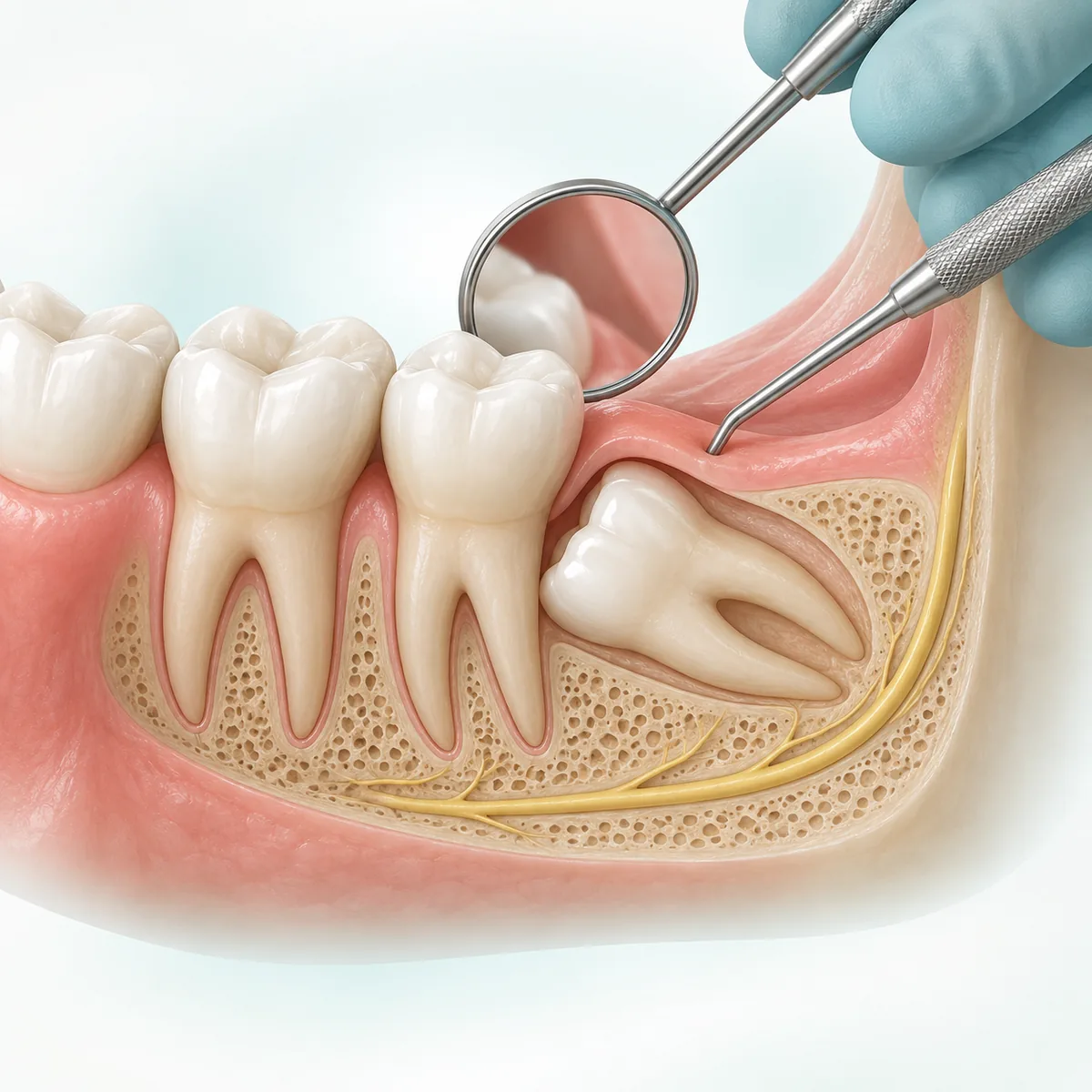
Not every wisdom tooth needs removal. Treatment is considered when symptoms, disease, position or risk to nearby structures creates a clinical reason to intervene.
When might removal be considered?
A wisdom tooth may need assessment because of repeated gum infection, decay, pain, damage to the adjacent tooth, cystic change or another clinical finding. A healthy, functional and cleanable wisdom tooth may sometimes be monitored.
- Repeated pain or gum inflammation
- Decay in the wisdom tooth or adjacent tooth
- Food trapping and cleaning difficulty
- Impaction or damage to nearby structures
- Other clinical or radiographic concerns
Simple extraction or surgery?
A fully erupted tooth with straightforward roots may be removed routinely. An impacted tooth may require a surgical approach. The expected difficulty depends on position, access, root form and relationship to nearby anatomy.
Why imaging matters
An OPG gives a broad panoramic view of the jaws and wisdom teeth. CBCT may be advised for selected cases when three-dimensional information is likely to change surgical planning. Not every patient needs CBCT.
When is an oral surgeon involved?
An oral and maxillofacial surgeon may be appropriate for deeply impacted teeth, complex roots, proximity to important anatomy, significant pathology, previous difficulty or other higher-complexity situations. Recovery instructions and relevant risks are discussed before treatment.
Frequently asked questions
Do all wisdom teeth need to be removed?
No. The decision depends on symptoms, disease, position, cleaning access and clinical findings.
How long is recovery?
Recovery varies with surgical difficulty and individual healing. The clinical team will explain expected aftercare.
When is swelling urgent?
Facial swelling with fever, difficulty swallowing, breathing or opening the mouth requires prompt assessment; breathing or swallowing difficulty can require emergency care.
Related videos from our clinic
Real clinic footage can help you understand the environment and general workflow. Your own care plan may be different after examination and imaging.