
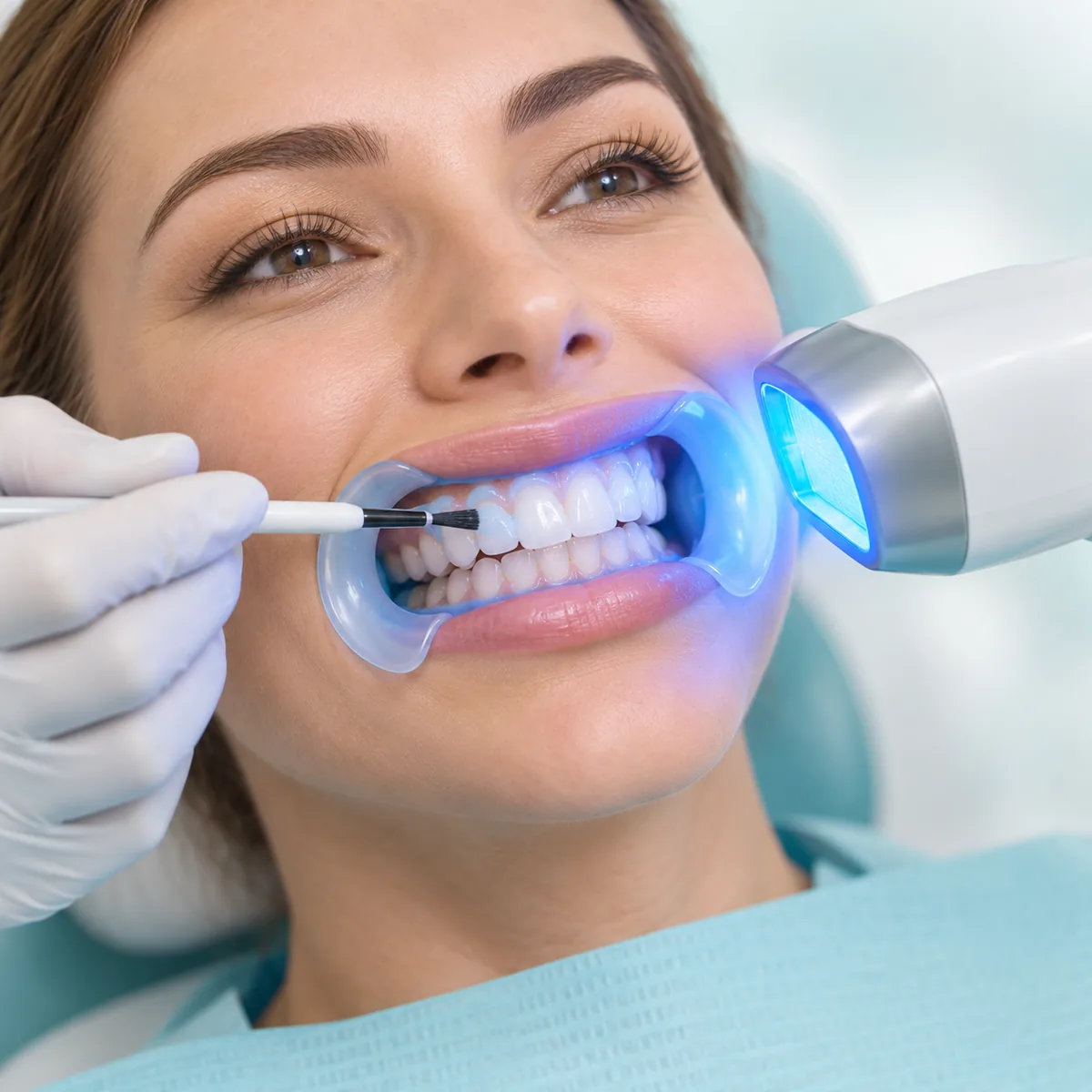
Whitening changes the colour of suitable natural teeth. Veneers change selected aspects of tooth shape, surface or colour. A dental assessment helps match the option to the concern.
Professional teeth whitening
Whitening may be considered for suitable natural tooth discolouration after active decay, gum disease and sensitivity risks are assessed. Existing fillings, crowns and veneers do not whiten in the same way as natural enamel.
Dental veneers
Veneers are thin restorations placed on the front surface of selected teeth. Options may include composite or porcelain materials, with preparation varying according to the tooth position, colour and planned result.
Planning before treatment
The clinician assesses tooth health, bite, gum position, existing restorations and expectations. Photographs, shade records, mock-ups or scans may help communicate a proposed change. The most conservative suitable option should be considered first.
Maintenance and limitations
Whitening results can change with time and exposure to staining habits. Veneers can chip, debond, stain at margins or eventually need replacement. Daily oral hygiene and review remain important.
Frequently asked questions
Can whitening change the colour of crowns or fillings?
No. Existing restorative materials may need separate assessment if colour matching is a concern.
Do all veneers require tooth preparation?
Preparation varies; minimal or no-preparation approaches are suitable only for selected situations.
Should I whiten before choosing veneer shades?
Often this is worth discussing during planning because whitening can affect the colour target for later restorations.