
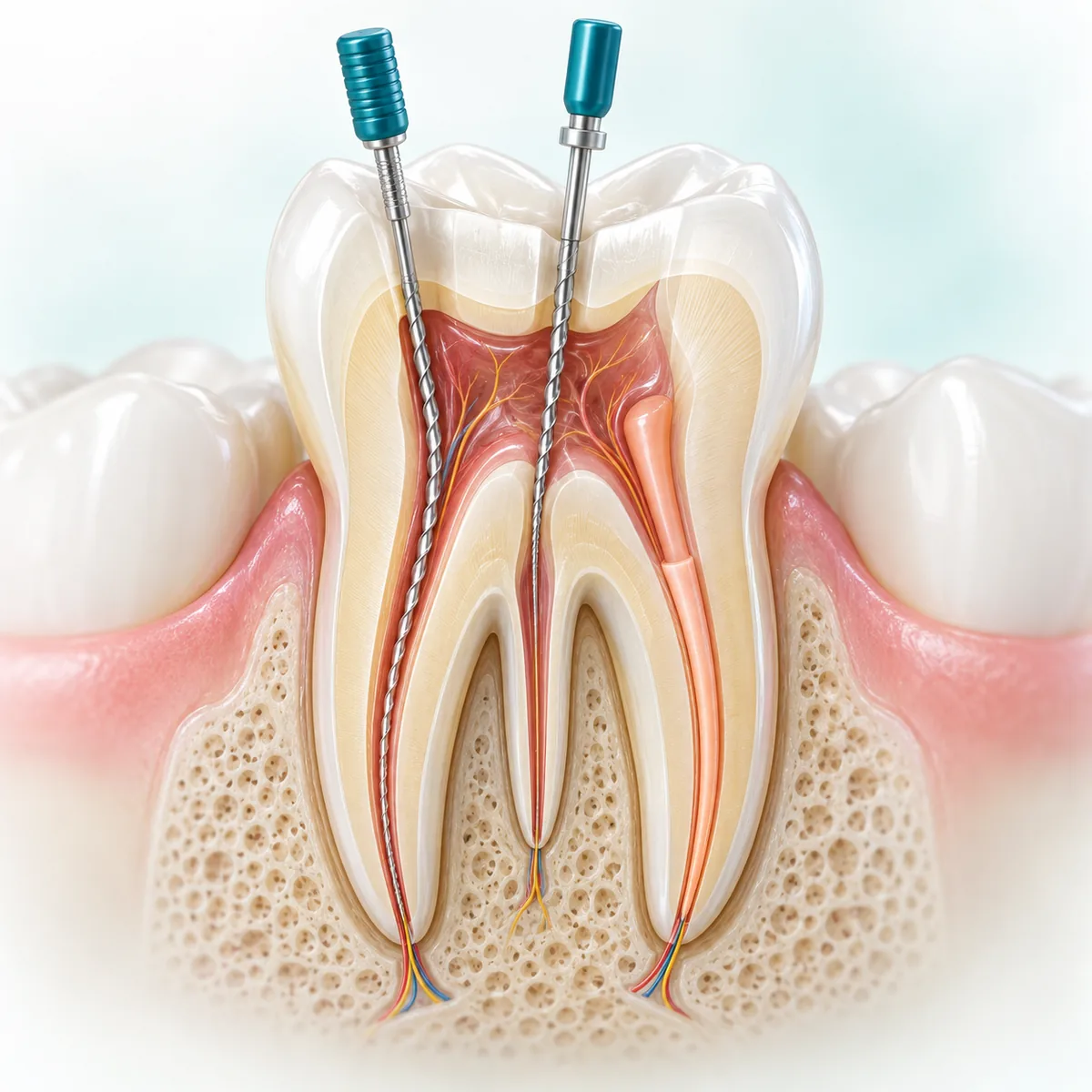
Root canal treatment may help retain a tooth when the pulp has become irreversibly inflamed or infected and the tooth can still be restored.
When might an assessment be needed?
Toothache can have several causes. Persistent spontaneous pain, lingering sensitivity, pain on biting, swelling, deep decay or a previous root canal problem should be assessed clinically. A dental examination and appropriate X-ray help determine whether the pulp or tissues around the root are involved.
- Persistent or worsening toothache
- Lingering sensitivity to hot or cold
- Swelling, tenderness or a gum boil
- Pain when biting or chewing
- A heavily restored, cracked or previously root-treated tooth
What happens during root canal treatment?
The dentist removes inflamed or infected tissue from inside the tooth, cleans and shapes the root canal system, and seals it. Treatment may take one or more appointments depending on the tooth and clinical findings. Local anaesthetic is normally used where appropriate.
- Assessment and appropriate dental imaging
- Isolation and access to the root canal system
- Cleaning, shaping and disinfection
- Sealing the canals and rebuilding the tooth
General dentist or restorative specialist?
Many routine root canal cases can be managed by a general dentist. A restorative dental specialist may be involved when anatomy is complex, a previous treatment has failed, the tooth is heavily damaged, or treatment planning requires advanced restorative input.
What happens after treatment?
A root-treated tooth may need a suitable final restoration, sometimes including a crown, depending on the remaining tooth structure and bite. Review and ongoing oral hygiene are important because root canal treatment does not make the tooth immune to fracture, decay or gum disease.
Frequently asked questions
Is every painful tooth treated with a root canal?
No. The cause of pain must be diagnosed first. Some teeth need a filling, gum treatment, monitoring, extraction or another form of care.
Can a root-treated tooth still need a crown?
Sometimes. The decision depends on the tooth, remaining structure, existing restorations and bite.
What if the tooth cannot be restored?
If the prognosis is poor, extraction and replacement options may be discussed after assessment.