
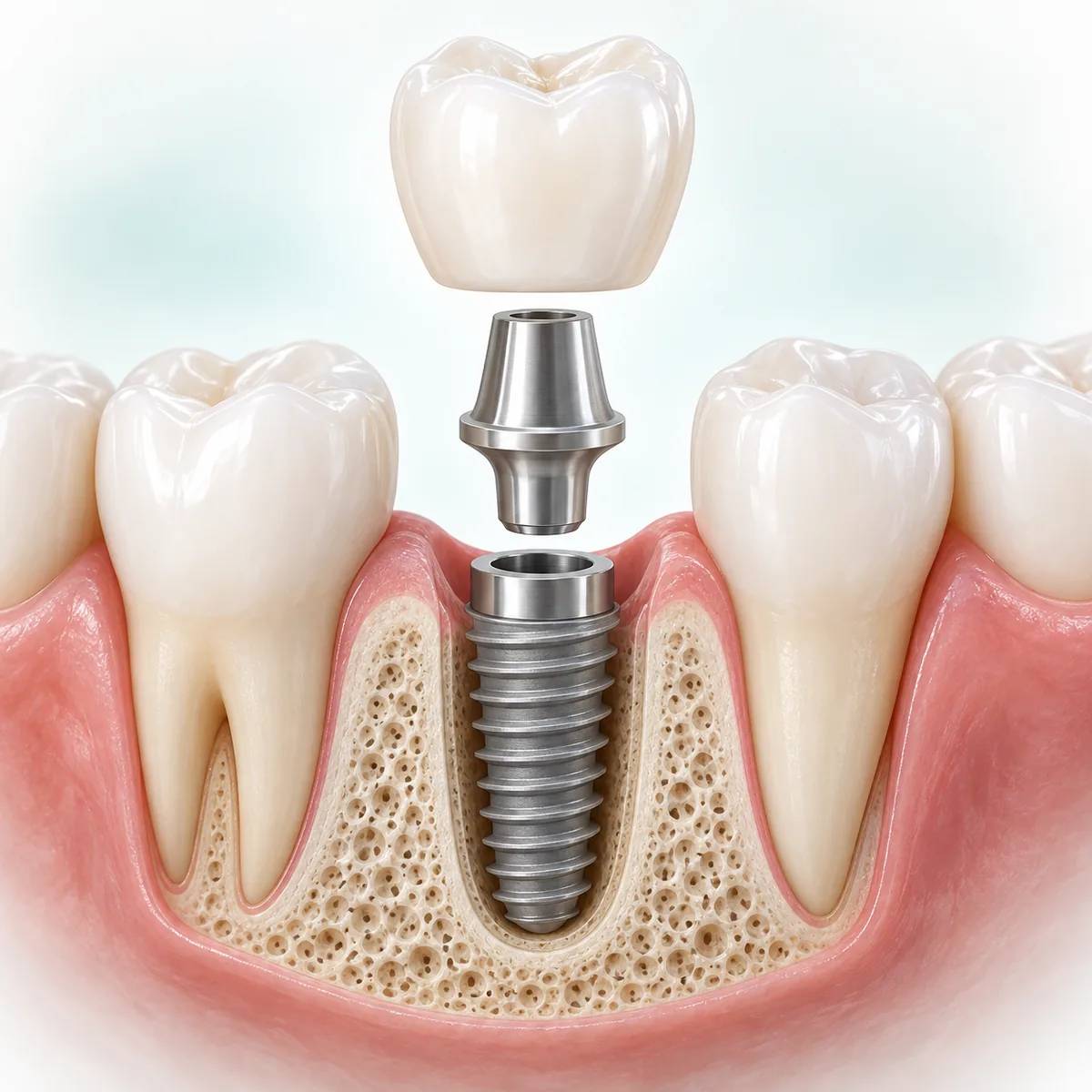
A dental implant is one option for replacing a missing tooth. Suitability depends on oral health, available bone, the intended restoration, maintenance and individual medical factors.
1 — Consultation
The process begins with your concern, dental history and treatment goals. The team examines the missing-tooth area, surrounding teeth, gums and bite, then compares implant treatment with bridge or denture options.
2 — Imaging and planning
Appropriate radiographs are used to assess the site. CBCT may be advised when three-dimensional information is clinically useful for evaluating bone and nearby anatomy. The final tooth position should guide implant planning.
3 — Implant placement
For suitable patients, the implant is placed surgically into the planned position. Some sites may require additional procedures, such as bone grafting, based on clinical findings.
4 — Healing
A healing period allows the implant and surrounding tissues to stabilise. Timing varies by site, procedure and individual healing. A temporary tooth option may be discussed when appropriate.
5 — Restoration and 6 — Maintenance
After healing, the restorative phase creates the crown, bridge or prosthesis attached to the implant. Long-term success also depends on cleaning, gum health, bite control and professional review. Implants can still develop biological or mechanical complications.
Frequently asked questions
Is an implant always better than a bridge?
No. Each option has advantages, limitations and maintenance needs. The condition of nearby teeth and bone affects the decision.
Does every implant case need CBCT?
No. CBCT is used selectively when the information is expected to help diagnosis or planning.
Can implants get gum disease?
Inflammation and bone loss can occur around implants, so daily cleaning and professional maintenance remain important.
Related videos from our clinic
Real clinic footage can help you understand the environment and general workflow. Your own care plan may be different after examination and imaging.