
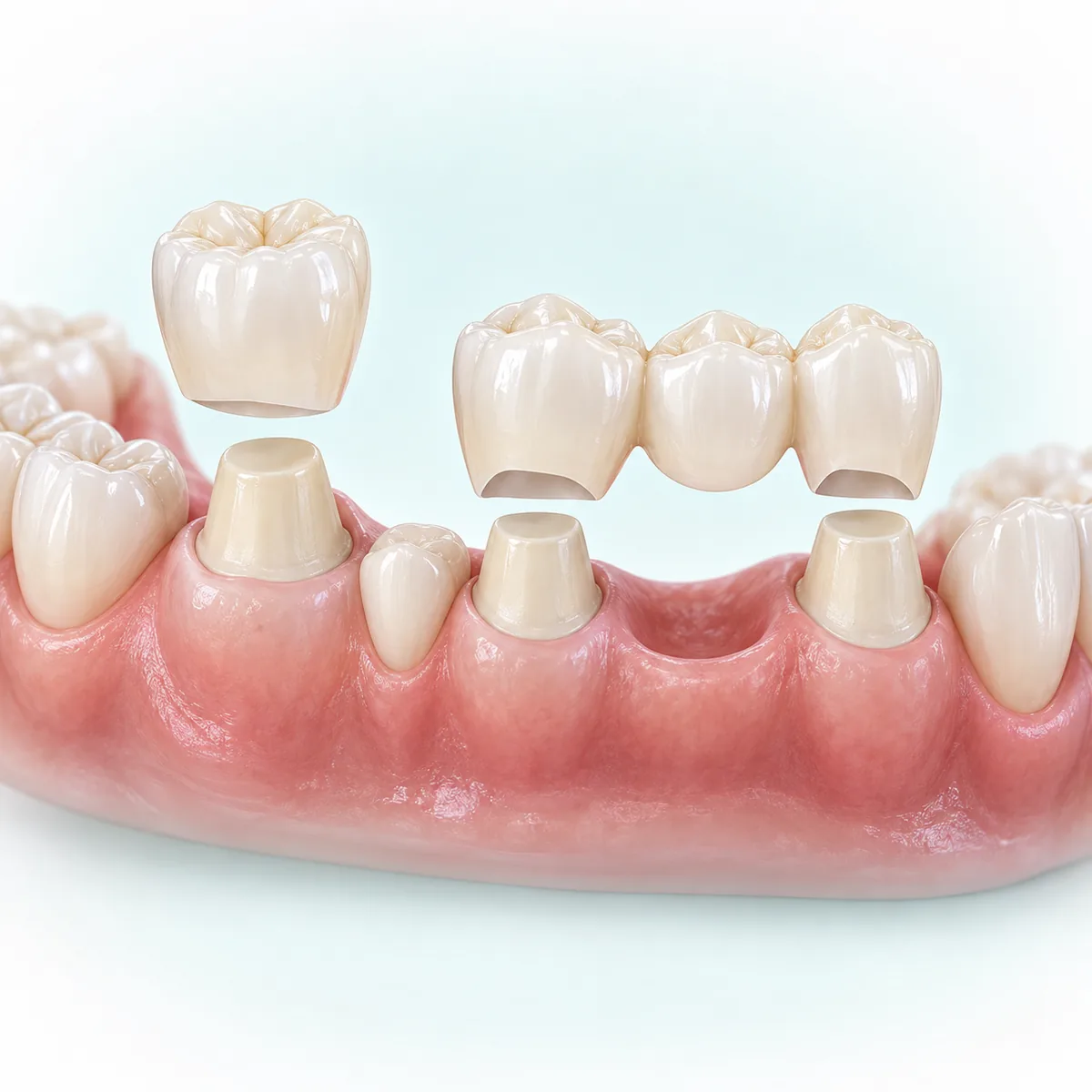
Crowns rebuild selected damaged teeth, while bridges can replace selected missing teeth by using neighbouring teeth or implants for support.
When might a crown be considered?
A crown may be discussed when a tooth has extensive damage, a large existing restoration, fracture risk, major wear or a need for a planned change in shape and function. It is not automatically required for every filled or root-treated tooth.
When might a bridge be considered?
A bridge can replace a missing tooth by connecting a replacement tooth to prepared neighbouring teeth or implant supports. The health and structure of the supporting teeth, the span, bite and cleaning access all affect suitability.
Assessment and preparation
The dentist assesses tooth structure, gums, bite and the proposed restoration. Treatment may include preparation, an impression or digital scan, a temporary restoration and laboratory fabrication before the final fit.
Maintenance and alternatives
Crowns and bridges require careful cleaning at their margins and under replacement teeth. Alternatives may include direct restorations, implants, dentures, monitoring or extraction depending on the diagnosis and goals.
Frequently asked questions
How long do crowns and bridges last?
Longevity varies with tooth condition, bite, materials, cleaning and maintenance; no restoration lasts indefinitely.
Does a crown protect a tooth from decay?
No. Decay and gum disease can still occur around the margins.
Is a bridge suitable if neighbouring teeth are healthy?
The advantages and tooth preparation required should be weighed against implant or removable options.
Related videos from our clinic
Real clinic footage can help you understand the environment and general workflow. Your own care plan may be different after examination and imaging.